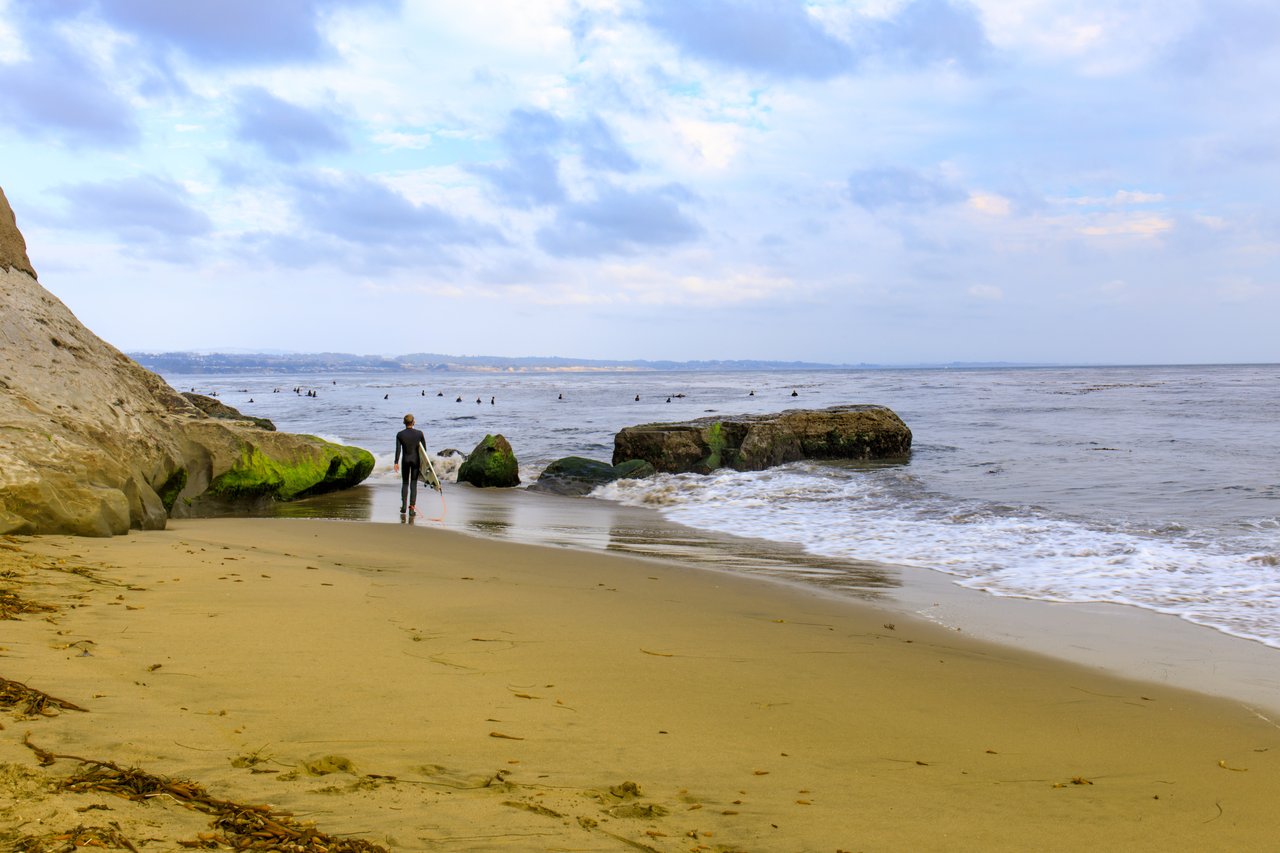
If your idea of home includes morning walks above the water, checking the surf before coffee, and running everyday errands in a place with real local character, Pleasure Point stands out. This is one of those Santa Cruz County areas where lifestyle is not a marketing phrase, but part of daily routine. If you are considering a move here, understanding how the neighborhood actually lives can help you decide whether it fits the way you want to spend your days. Let’s dive in.
What defines Pleasure Point
Pleasure Point is an unincorporated Santa Cruz County coastal community set between Moran Lagoon and 41st Avenue along Monterey Bay. Local and county sources describe it as a classic beachside area with a deep connection to Santa Cruz surf history, including ties to Jack O’Neill.
The neighborhood has a clear identity shaped by the ocean, surf culture, outdoor living, and a small-scale local business scene. County design guidance also treats Pleasure Point as a distinct local center, with Portola Drive and lower 41st Avenue serving as the main commercial corridor.
Daily life centers on the coast
In Pleasure Point, the shoreline is part of everyday life. East Cliff Drive works like an outdoor living room where people walk, bike, pause to watch surfers, and head toward shoreline viewpoints and tide pools when conditions allow.
You will often hear familiar local references like The Hook and The Point, which help define the rhythm of the area. Surfing here is more than a weekend activity. The broader Santa Cruz surf zone is recognized by the City of Santa Cruz as part of the World Surfing Reserve, and that public identity carries into the way Pleasure Point is experienced.
County project records also show how important shoreline access is to the neighborhood. Bluff-stabilization work added or replaced beach access stairways at 32nd Avenue, 36th Avenue, and The Hook, reinforcing how central the coast is to daily routines.
Local errands feel more personal
One of Pleasure Point’s biggest lifestyle advantages is that practical errands can feel more enjoyable than rushed. The business mix around 41st Avenue and Portola Drive includes surf and skate gear, beach apparel, coastal home décor, and vintage or resale shopping.
Food and drink options help create that easy neighborhood rhythm. County visitor sources currently highlight places such as The Point Market, The Penny Ice Creamery, Pleasure Pizza, and Cat & Cloud Coffee.
There is also a weekly routine built around the Live Oak/Eastside Farmers Market. Held on Sundays year-round, it serves as a regular tradition for Live Oak, Pleasure Point, and Capitola, giving the area a steady community cadence beyond the beach itself.
Housing has a layered coastal character
Pleasure Point’s housing stock reflects years of change in a high-demand coastal setting. Public planning materials describe a mix of older, smaller beach homes and bungalows on irregular lots, along with newer and larger two-story homes added over time.
That mix is part of what gives the neighborhood its texture. You may find homes with classic beach-cottage scale near properties that reflect more recent rebuilding and expansion.
At the same time, county records note that development pressure has led to larger replacement homes that can feel out of scale with nearby houses. For buyers, that means each block can feel a little different, and understanding the immediate surroundings of a property matters.
Why the built environment feels different
Pleasure Point is not designed like a generic coastal commercial strip. County design guidance for the corridor favors varied architectural styles, pedestrian-oriented frontages, and a locally focused setting where people shop, dine, live, relax, and interact.
In simple terms, the planning vision supports fine-grained neighborhood character rather than large-format retail or big-box development. That helps explain why the area feels more personal, eclectic, and tied to local use.
For you as a buyer or homeowner, this can be a meaningful part of the appeal. The neighborhood experience is shaped not just by the water, but by the scale and texture of the places around you.
What buyers should know before purchasing
Pleasure Point can be a strong fit if you want direct shoreline access, a surf-oriented coastal lifestyle, and a neighborhood with a clearly defined sense of place. The area’s public-access infrastructure, business mix, and long-standing identity all support that kind of day-to-day experience.
Still, it is important to weigh the trade-offs with open eyes. County records point to ongoing coastal bluff erosion, stabilization work along East Cliff Drive, and recurring parking and access concerns because the area attracts surfers, beachgoers, and visitors.
That means living close to the coast here comes with both beauty and practical complexity. Depending on the location of the property, your day-to-day experience may include more visitor activity and more infrastructure considerations than in an inland neighborhood.
Remodeling and property changes may take more planning
If you are thinking beyond the initial purchase, Pleasure Point has another layer to consider. Santa Cruz County notes that some parcels may be subject to additional setbacks near coastal bluffs or within the Pleasure Point design district.
The county also says that accessory dwelling unit rules in Pleasure Point can be more restrictive than general county standards. For homeowners, that means additions, remodels, and accessory units often require more site-specific planning than they would elsewhere.
This does not mean improvement is off the table. It simply means the details matter, and understanding site conditions and local rules early can help you plan more confidently.
The lifestyle trade-off is clear
Every coastal neighborhood asks something in return for ocean proximity, and Pleasure Point is no exception. The central question is whether easy access to the shoreline, surf culture, and a highly distinctive neighborhood feel outweigh coastal maintenance realities, tighter development rules, and occasional parking pressure.
For many buyers, the answer is yes because the lifestyle is so specific and hard to replicate. Few places offer the same blend of daily ocean access, local business character, and long-established surf identity.
If that is the kind of setting you are looking for, Pleasure Point can offer a very grounded version of Santa Cruz County coastal living. It feels active, scenic, and local in a way that is difficult to manufacture.
How to evaluate fit block by block
When you explore Pleasure Point, it helps to think beyond the broad neighborhood name. Look closely at how near a property sits to East Cliff Drive, the shoreline access points, and the Portola Drive or 41st Avenue commercial area.
Pay attention to the pace of the street, visitor activity, parking conditions, and the surrounding mix of homes. In a neighborhood with irregular lots, varied housing styles, and site-specific development considerations, small location differences can shape your experience in a big way.
That is one reason hyperlocal guidance matters here. A home in Pleasure Point is not just about square footage or finishes. It is also about how that particular location connects to the coastal routine you want.
If you are thinking about buying or selling in Pleasure Point, working with a team that understands Santa Cruz County’s coastal micro-markets can make the process feel far more informed and far less stressful. David Lyng Real Estate offers full-service guidance grounded in local knowledge, strong relationships, and a long view of what makes each Monterey Bay neighborhood distinct.
FAQs
What is everyday life like in Pleasure Point, Santa Cruz?
- Everyday life in Pleasure Point often centers on East Cliff Drive, shoreline access, surf watching, walking, biking, local coffee stops, and errands around Portola Drive and 41st Avenue.
What kind of homes are found in Pleasure Point?
- Pleasure Point includes a mix of older, smaller beach homes and bungalows on irregular lots, along with newer and larger two-story houses added over time.
What should buyers know about coastal living in Pleasure Point?
- Buyers should be aware of practical coastal factors noted in county records, including bluff erosion, stabilization work along East Cliff Drive, parking pressure, and visitor activity tied to the shoreline and surf breaks.
Are there special building rules in Pleasure Point?
- Yes. Santa Cruz County notes that some parcels may have additional setback requirements near coastal bluffs or within the Pleasure Point design district, and ADU rules can be more restrictive than standard county rules.
Where do people shop and grab coffee in Pleasure Point?
- The neighborhood commercial hub is centered around Portola Drive and lower 41st Avenue, with local shops, surf-related retail, and food and drink spots such as The Point Market, Pleasure Pizza, The Penny Ice Creamery, and Cat & Cloud Coffee.
Is Pleasure Point a good fit for a coastal lifestyle buyer?
- Pleasure Point can be a strong fit if you want daily ocean access, a surf-oriented setting, and a neighborhood with a distinct local identity, and if you are comfortable with the trade-offs that can come with living close to the coast.