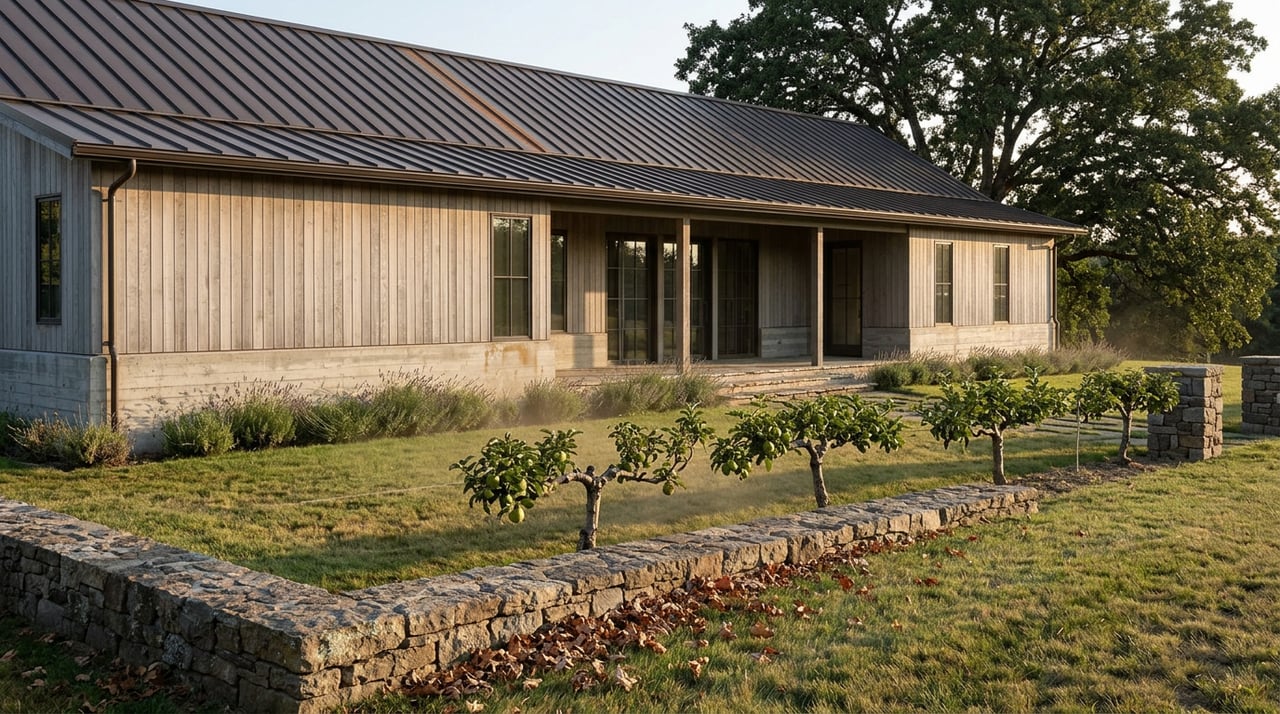
Two eleven-acre parcels in Corralitos can carry the same soil, the same water access, the same distance to town, and still owe property taxes that differ by tens of thousands of dollars a year. The gap has nothing to do with the dirt. It comes down to a single line on the county's zoning map, and a filing window that closed years ago and has not reopened since.
That line is the Williamson Act, formally the California Land Conservation Act of 1965. If you're shopping acreage around Watsonville, Corralitos, or Larkin Valley, you'll run into it on almost every farm and ranch listing, usually as a footnote. It deserves more than a footnote. It is the difference between a parcel you can carry comfortably for twenty years and one whose tax bill climbs toward full market value the day you close.
What a Williamson Act Contract Actually Buys
A landowner who enrolls agricultural land in a Williamson Act contract agrees to keep it in farming or open space use. In exchange, the county assesses the land at its agricultural income value rather than what it would fetch if sold for development. The savings run wide: California Department of Conservation materials put the reduction at 20 to 75 percent off the market-value assessment.
In Santa Cruz County, eligible land has to meet county requirements. Santa Cruz County's program page says the standard contract runs 10 years and renews automatically each year, so it always sits 10 years out unless someone files to stop it.
Once a parcel is enrolled, the county marks it with a combining zone designation, a small "-P" appended to the base zoning, visible on the county's planning GIS. That marking is the tell. A contracted parcel is subject to use restrictions.
The Door That Closed
Here's the part that doesn't show up in most listing descriptions. According to the county's own program page, Santa Cruz is currently accepting no new Williamson Act applications. The county is maintaining existing contracts only, and has stated it will not accept or act on new enrollment until the state resumes making subvention payments, the funding the state used to send counties to offset the tax revenue they give up under the program. Those payments were cut during a state budget shortfall more than a decade ago, and the freeze on new Santa Cruz County contracts has simply outlasted that shortfall.
Practically, that means a parcel not already under contract cannot get one now, no matter how much farm income it produces or how badly a buyer wants the tax break. The contract is either already attached to the land, or it isn't available at all.
Compare that to Monterey County, just south, where the program is still open and the county's Williamson Act page lists September 15 as the next application deadline. That deadline lands in less than two weeks from today. Monterey's version also runs longer at the outset, with a 20-year minimum initial term instead of Santa Cruz's standard 10, in exchange for a bigger up-front commitment. The two counties sit next to each other on a map and run completely different rules for anyone trying to get into the program today. Santa Cruz's door is closed. Monterey's has an application deadline you can circle on a calendar.
That contrast is worth sitting with if you're cross-shopping acreage on both sides of the Pajaro River. A parcel a mile into Monterey County still has a path to enrollment. The same parcel a mile north, inside Santa Cruz County, does not.
Two Tiers, for Now
This is what the closed door does to the local market. It doesn't just affect one property here or there. It splits every piece of Watsonville-area farmland into two categories:
- Contract land. Already enrolled, marked with the -P zone, taxed on farm income rather than market value.
- Open land. Never enrolled, taxed at full market-based assessment, free to pursue whatever development its base zoning allows, and currently ineligible to enter the Williamson Act program under the current moratorium.
A buyer touring both types back to back might see near-identical acreage, similar frontage, comparable soil quality, and assume the pricing difference is just negotiating room. It isn't. The two parcels differ in tax treatment and use restrictions.
One recent Corralitos listing made this concrete: an eleven-plus-acre flat parcel with an old apple orchard and city water access, listed at $850,000. Whether that number reflects contract land or open land changes the real cost of ownership by thousands of dollars a year, every year, for as long as you hold it. That's not a detail worth discovering after escrow opens.
Getting Out Was Never Supposed to Be Easy
If you're eyeing contract land and figuring you'll just cancel it once you own it, know what you're signing up for. Santa Cruz County requires three separate public hearings to approve entering, exiting, or cancelling a contract: recommendations from the Agricultural Policy Advisory Commission and the Planning Commission, followed by final approval from the Board of Supervisors. Cancellation requires substantial evidence, and the fact that another use would be more profitable is explicitly not enough on its own.
There's a slower, cheaper exit called non-renewal. A landowner files notice, the annual renewal stops, and the contract runs out over its remaining term. The faster exit, cancellation, comes with a fee. Neither path is something you'd want to discover mid-negotiation.
A Related Wrinkle: Conservation Easements Aren't the Same Contract
Land Trust Santa Cruz County lists Pajaro Valley farmland among the areas it protects, which raises a fair question for buyers scanning title reports in that corridor: is this the Williamson Act, or something else? It's worth knowing the two are different tools. A Williamson Act contract is a renewable tax agreement with the county that can eventually lapse through non-renewal. If a parcel carries both, don't assume one explains the other.
What This Means If You're Touring Acreage
Before you fall for a piece of ground, look it up on the county's planning GIS and check for the -P combining zone. If it's there, ask for a copy of the actual contract, not just a summary, so you can see the remaining term and whether a non-renewal notice has already been filed. Ask your escrow officer to confirm contract status in writing rather than relying on the listing description. And don't structure your offer around the assumption that you can enroll uncontracted land later. Under the current moratorium, you can't.
If the tax savings matter to your numbers, contract land is the only place in Santa Cruz County you'll find them right now. If flexibility to build or subdivide matters more, open land, even at a higher tax basis, may pencil out better over time.
What This Means If You're Selling Contracted Ground
If your own parcel already carries a Williamson Act contract, that status is part of your marketing story, not a disclosure to bury. It narrows your buyer pool to people who want working land and are comfortable with the use restriction, but it also gives those buyers a real, quantifiable reason to pay for your property over an uncontracted one nearby. Have your contract terms, remaining years, and assessed value ready before your first showing. A buyer who has to chase that information down through the county assessor's office is a buyer who starts negotiating from a position of doubt. A current valuation that accounts for the contract, rather than ignoring it, is the right starting point for pricing.
A Few Direct Questions
Can I apply for a new Williamson Act contract on land I'm about to buy in Santa Cruz County? Not currently. The county is only maintaining existing contracts and has paused new enrollment until the state resumes subvention payments to local governments.
Does a Williamson Act contract stop me from building a house? Generally no. A single-family residence plus structures tied to the agricultural use, like barns, is typically allowed as a compatible use.
What if I want to subdivide a contracted parcel later? Expect a long process. Cancellation specifically requires three public hearings, a finding of substantial evidence, and a fee.
Farmland pricing around Watsonville rarely shows its true math on the listing sheet. If you're comparing acreage in Corralitos, Larkin Valley, or the Pajaro Valley corridor and want someone to pull the actual contract status before you write an offer, David Lyng Real Estate works this ground regularly and can walk the numbers with you before you're standing in a barn deciding what it's really worth.
This article is general information, not legal, tax or financial advice. Consult a qualified professional about your situation.